We build our lives on
assumptions.
We assume tomorrow will look a lot like today. We assume what worked yesterday will continue to work tomorrow. Most of the time, those assumptions are good enough. Until one day, they aren't. The STILL Framework didn't begin as a framework. It began as an attempt to understand what happens when the assumptions we rely on stop being true.
Continue →I wasn't trying to
build a framework.
At one point, everything I believed about how my life worked stopped being true. The plans I'd made no longer fit reality, and the advice I'd collected wasn't much help either.
As I tried to move forward, I started organising my thoughts. Over time, those ideas became a framework. Not because I wanted to create one. Because I needed something that helped me think more clearly.
That became what I now call the STILL Framework.
Why rebuilding feels
so difficult.
Getting stuck rarely feels like failing. It feels like doing what has always worked, then quietly discovering it doesn't anymore.
Every decision we make is based on what we believe to be true. We choose careers, build businesses, invest money, and make plans using the best understanding we have at the time. Most of the time, those assumptions are good enough.
Then something changes. Or we discover that what we believed was never true to begin with. Rebuilding doesn't begin when we try harder. It begins when we recognise that some of the assumptions we relied on no longer describe the world as it is.
The Five Steps
The STILL Framework is a five-step process for rebuilding when your assumptions no longer match reality. The acronym exists to organise the idea. The idea doesn't exist to justify the acronym.
See the pattern
Notice which assumption stopped being true before blaming yourself for the outcome.
Tell the truth
Describe what actually happened, without the version that protects your ego.
Inventory what remains
Count what remains, not what you've lost.
Lower the floor
Lower the cost of staying in the game.
Launch small
Start with small experiments before making bigger commitments.
The idea,
written as essays.
The story behind the framework.
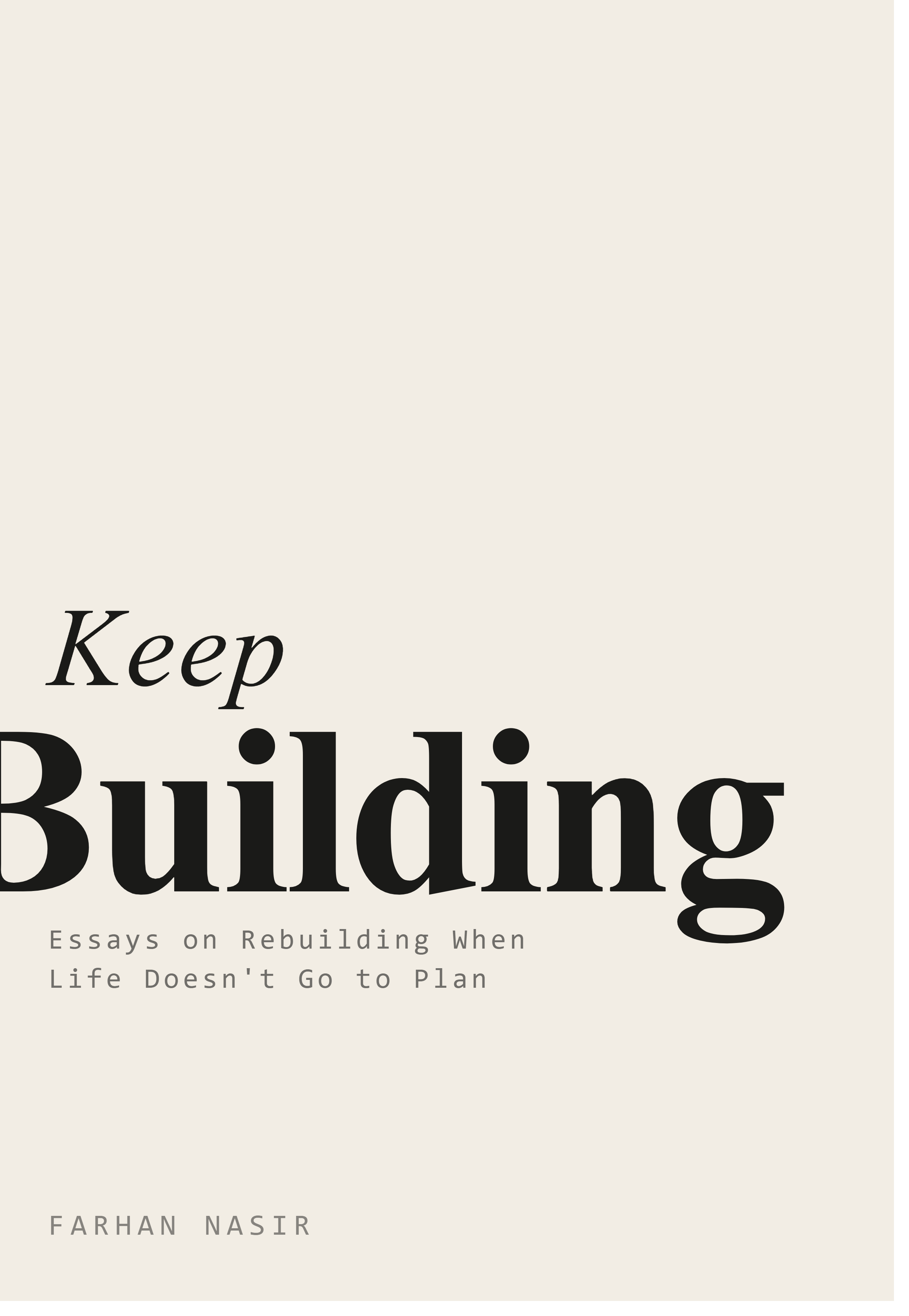
Keep Building
A collection of personal essays written while I was rebuilding my life after many of the assumptions I relied on stopped being true. These experiences eventually became the STILL Framework. Not a self-help book. Not a success story. Just an account of what happens between the fall and whatever comes next.
Read on Amazon →Different ways
to explore the work.
Read it. Discuss it. Apply it.
Essays
Essays exploring rebuilding, assumptions, and the decisions we make when they no longer hold.
Read the essays →Talks and workshops
A talk introducing the STILL Framework, or a workshop where we apply it to a real problem.
- Talk: a different way to look at the decisions you're facing.
- Workshop: the opportunity to apply the STILL Framework to a real challenge and leave with a defined next step.
- Initial enquiry: share your objectives, audience, and event details.
- Discovery: a short call or email to understand your goals.
- Preparation: the session is tailored to your audience and context.
- Delivery: keynote or interactive workshop.
- Follow-up: a summary of the key ideas and recommended next steps.
One-on-one
A focused discussion for situations where thoughtful decisions matter.
Advisory is intentionally limited, and only available for situations where a book, talk, or workshop isn't enough.
- A structured breakdown of your situation.
- Questions that help you think more deeply about the decision you're facing.
- A written summary with recommended next steps.
- Initial enquiry: describe the situation you're facing.
- Fit assessment: I'll determine whether I'm the right person to help.
- Background review: share any relevant context in advance.
- Advisory session: a focused discussion on the decision at hand.
- Follow-up: a written summary of the key observations and recommended next steps.
Follow the work.
I write essays, share ideas, and document what I'm building. Most of it lives on my personal website, Instagram, and TikTok.
Visit farhannasir.com.my →